Maps of Music
Live at Wembley '86 (1992)
Where the lyrics of Live at Wembley '86 take you, and where it was really made.
The stadium where this record was made no longer exists: the old Wembley was pulled down in 2002 and a new one stands on its site.
View on the map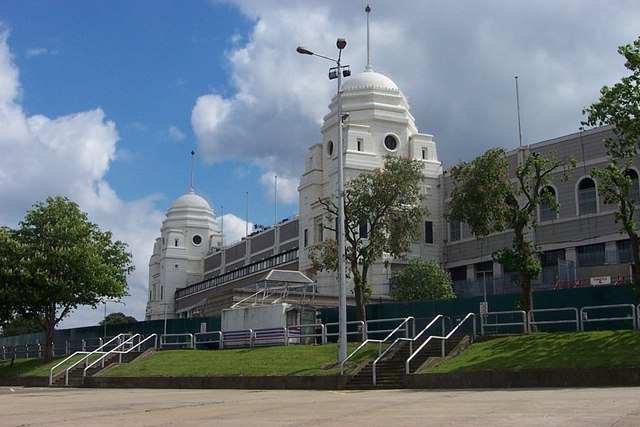
Key places
Saturday night at the old Wembley (1986)
Live show Wembley Stadium (1923, demolished) — Queen played two nights at the old Wembley Stadium on 11 and 12 July 1986. The Saturday show was recorded and became this album. The stadium was pulled down in 2002 and a new one now stands on the site. Google Maps · Apple Maps
How to get there: Jubilee or Metropolitan line to Wembley Park station, then a short walk to the new stadium on the old site.
Album story
Overview
- Live at Wembley '86: double live album by Queen
- Recorded live Saturday 12 July 1986, Magic Tour, Wembley Stadium, London
- Released 26 May 1992 on EMI/Parlophone; Hollywood Records in the US
- Two CDs, 28 tracks, 110:53 in total; produced by Queen
- Full-length document of a stadium night at the old Wembley
- Mercury died November 1991, six months before release
- Old Wembley demolished 2002, replaced by a new stadium on the same site
Background
- Magic Tour: 26 shows in Europe, in support of the album A Kind of Magic
- First Queen concert series since Live Aid in July 1985
- 72,000 tickets for 11 July sold out quickly, so a second night was added
- More than 150,000 people over the two nights
- Original Saturday concert began 4.00pm; tickets cost 14.50 pounds
- Four acts in order: INXS, The Alarm, Status Quo, Queen
- Line-up: Freddie Mercury, Brian May, Roger Taylor, John Deacon
- Spike Edney on keyboards
- Mercury's last performance with Queen came at Knebworth, 9 August 1986, a few weeks after these concerts
Recording
- Friday night was played in bad weather; Saturday was clear
- Saturday show filmed by Tyne Tees and recorded by Capital Radio
- Album captures the Saturday show, 12 July 1986
- Overdubs added in September 1986
Sources: en.wikipedia.org · en.wikipedia.org · en.wikipedia.org · en.wikipedia.org · en.wikipedia.org · en.wikipedia.org · en.wikipedia.org · en.wikipedia.org · en.wikipedia.org
Tracklist
Disc 1
| 1 | One Vision | 5:51 |
| 2 | Tie Your Mother Down | 3:52 |
| 3 | In the Lap of the Gods | 2:44 |
| 4 | Seven Seas of Rhye | 1:18 |
| 5 | Tear It Up | 2:12 |
| 6 | A Kind of Magic | 8:42 |
| 7 | Under Pressure | 3:41 |
| 8 | Another One Bites the Dust | 4:54 |
| 9 | Who Wants to Live Forever | 5:16 |
| 10 | I Want to Break Free | 3:34 |
| 11 | Impromptu | 2:57 |
| 12 | Brighton Rock Solo | 9:11 |
| 13 | Now I’m Here | 6:20 |
Disc 2
| 1 | Love of My Life | 4:49 |
| 2 | Is This the World We Created…? | 2:58 |
| 3 | (You’re So Square) Baby I Don’t Care | 1:36 |
| 4 | Hello Mary Lou (Goodbye Heart) | 1:51 |
| 5 | Tutti Frutti | 2:54 |
| 6 | Gimme Some Lovin’ | 0:55 |
| 7 | Bohemian Rhapsody | 5:51 |
| 8 | Hammer to Fall | 5:57 |
| 9 | Crazy Little Thing Called Love | 6:06 |
| 10 | Big Spender | 1:07 |
| 11 | Radio Ga Ga | 5:57 |
| 12 | We Will Rock You | 2:48 |
| 13 | Friends Will Be Friends | 2:06 |
| 14 | We Are the Champions | 4:05 |
| 15 | God Save the Queen | 1:27 |
Sources: musicbrainz.org
Artist
Formation
- Queen are a British rock band formed in London in 1970 by Freddie Mercury (lead vocals, piano), Brian May (guitar, vocals), and Roger Taylor (drums, vocals).
- John Deacon (bass) joined in February 1971, completing the classic line-up.
- Mercury suggested the name "Queen".
- Early works were influenced by progressive rock, hard rock and heavy metal, later expanding into arena rock and pop rock.
Members
- Freddie Mercury (lead vocals, piano, 1970–1991, died 1991).
- Brian May (guitar, vocals, 1970–present).
- Roger Taylor (drums, vocals, 1970–present).
- John Deacon (bass, 1971–1997, retired).
- Paul Rodgers (vocals, 2004–2009) and Adam Lambert (vocals, 2011–present) toured as "Queen +".
Career
- First UK chart hit with Queen II (1974); international success with A Night at the Opera (1975) and "Bohemian Rhapsody", which topped the UK chart for nine weeks.
- News of the World (1977) contained "We Will Rock You" and "We Are the Champions", now sports anthems.
- Greatest Hits (1981) is the best-selling album in UK chart history.
- Live Aid performance (1985) is ranked among the greatest in rock history.
- Estimated record sales of 250–300 million, one of the world's best-selling music artists.
- Inducted into the Rock and Roll Hall of Fame in 2001; received the Grammy Lifetime Achievement Award in 2018 and the Polar Music Prize in 2025.
Sources: en.wikipedia.org · en.wikipedia.org · en.wikipedia.org · en.wikipedia.org · en.wikipedia.org
Reception
Reappraisal
- AllMusic: 3.5 out of 5
- MusicHound Rock: 4 out of 5
- The Rolling Stone Album Guide: 3 out of 5
Records
- UK Albums Chart: number 2
- New Zealand: number 3
- Austria: number 6
- Switzerland: number 6
- Netherlands: number 12
- Hungary: number 13
- Finland: number 17
- Germany: number 20
- Sweden: number 29
- United States (Billboard 200): number 53
- United Kingdom: Platinum, 2013 (300,000)
- France: Platinum, 1993
- Switzerland: Gold, 1993
- Germany: Gold, 2003
- Netherlands: Gold, 2005
- Brazil: Gold, 2001
- New Zealand: Gold
- United States: Platinum, 1999, stands for one million shipped copies
Sources: en.wikipedia.org · en.wikipedia.org · en.wikipedia.org
Trivia
- The first night, 11 July, sold out 72,000 tickets so fast that the band added the Saturday show; together the two nights drew more than 150,000 people.
- Giant inflatable models of the cartoon band from the A Kind of Magic album cover were released over the crowd; three were caught and one landed in Chelmsford, about 35 miles away.
- Mercury told the Wembley crowd directly that rumours of a Queen split were false.
- The last part of the tour set repeated the six songs Queen had played at Live Aid, held at the same stadium on 13 July 1985.
- After the second show Mercury played an impromptu set at Kensington Roof Gardens with Fish of Marillion and Samantha Fox.
- Five weeks before this album came out, the Freddie Mercury Tribute Concert was held at the same Wembley Stadium, on 20 April 1992.
Sources: en.wikipedia.org · en.wikipedia.org · en.wikipedia.org
View on the map